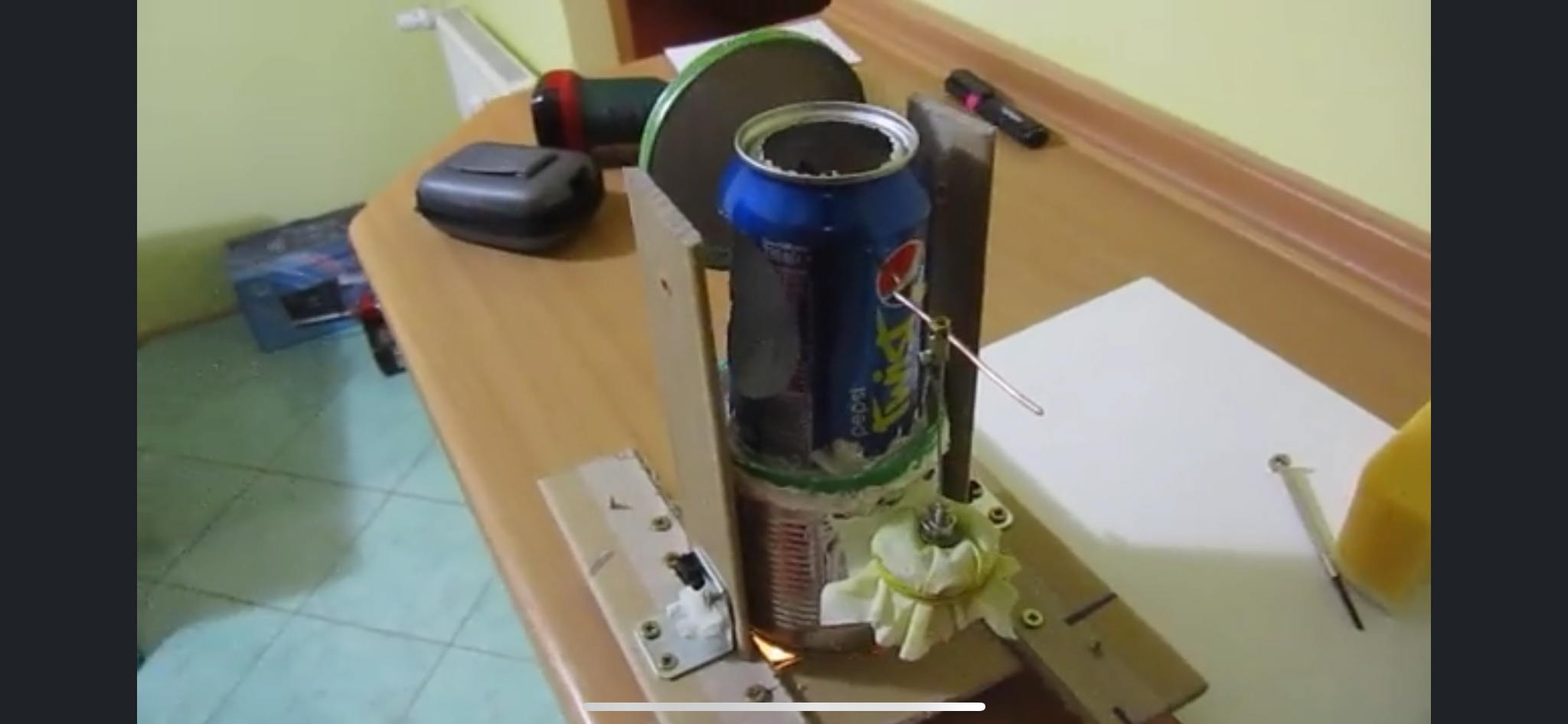
I built this small Stirling engine because I wanted to understand how the thermodynamic cycle actually worked in practice.
After reading about the basic operating principle, I put together a simple version using whatever inexpensive materials I had available. The main cylinder was made from a food can, the crankshaft was bent by hand from copper rod, and some of the internal parts were improvised from household materials, including sponge.
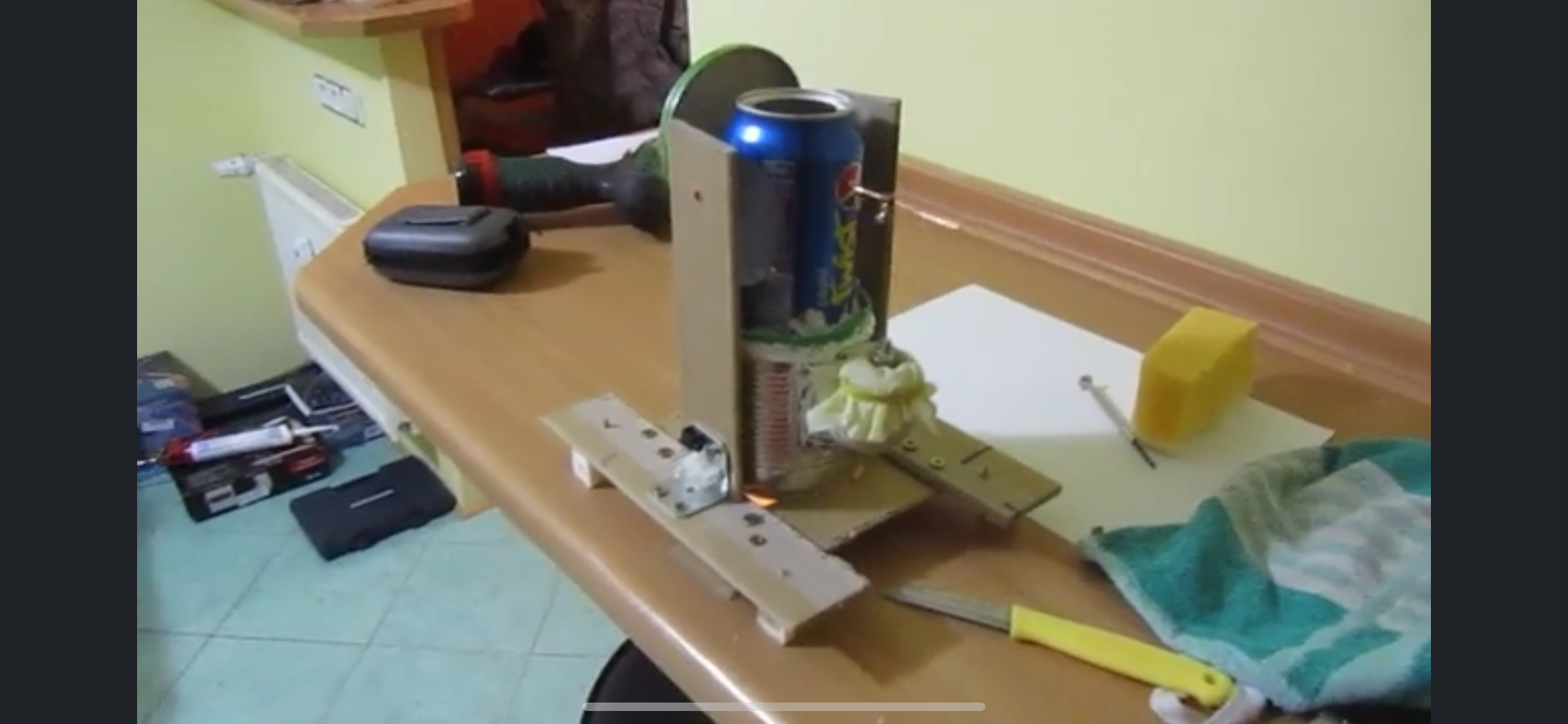
The engine did run, although only barely and for short periods. It needed a large temperature difference to keep moving, and after heating it for too long, the sponge inside the cylinder started to melt.
It was definitely not an optimized design, but that was not really the point. Building it gave me a much better understanding of the cycle than simply reading about it. It was one of those projects where even getting something imperfect to work made the theory much easier to understand.