This project started after someone mentioned electric hydrofoil boards to me in a conversation. I had never worked with one before, but the idea caught my attention because it combined a lot of things I wanted to learn: mechanical design, composites, aerodynamics, machining, electrical systems, and on-water testing.
I decided to build one myself from the ground up.
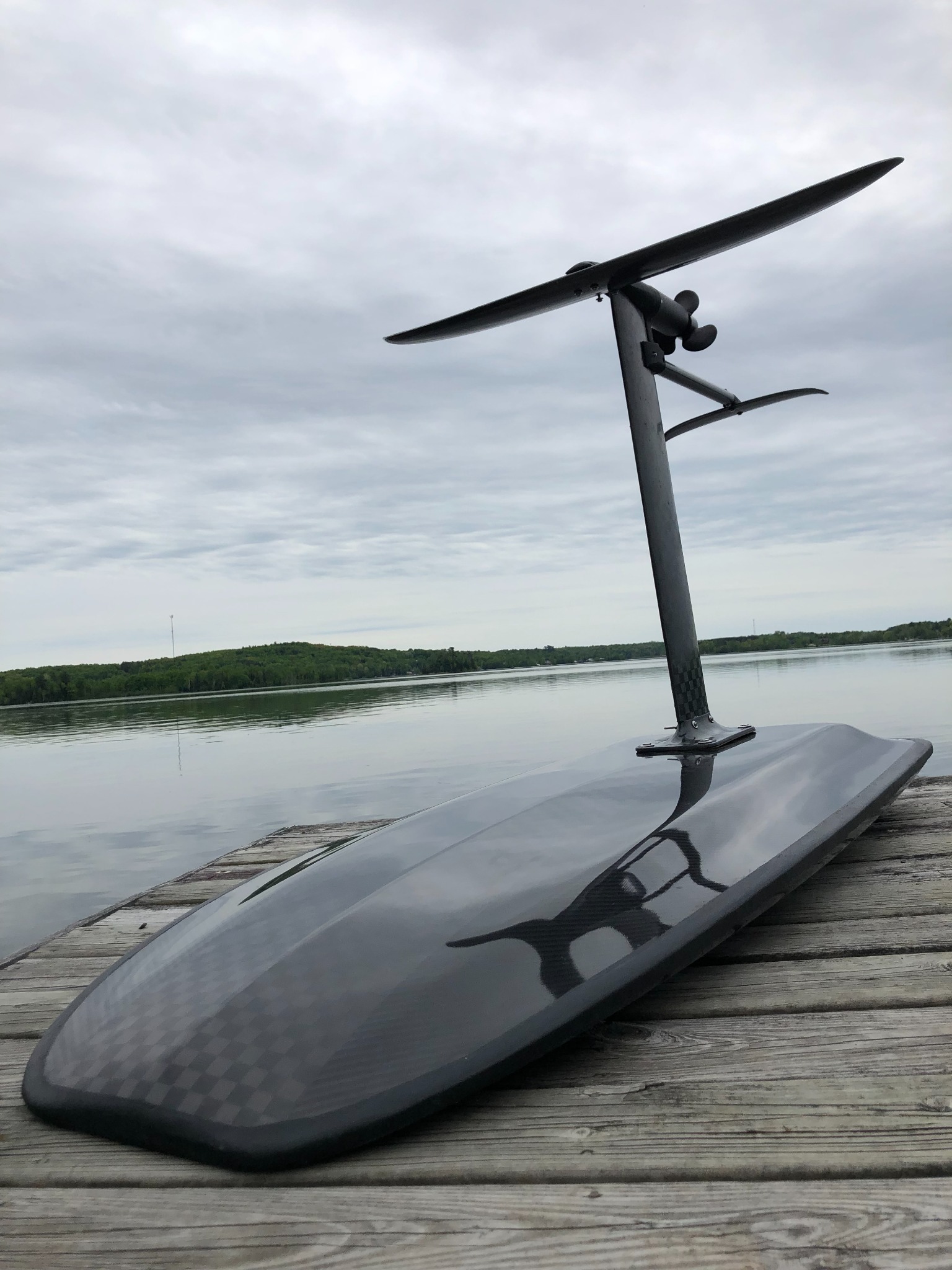
I designed the main structural and composite parts in SolidWorks and used XFLR5 and ANSYS to look at the foil design and structural loads. The motor, batteries, controller, and other electrical components were purchased, while most of the board itself was designed and built by me.
The first prototype was completed near the end of 2021. It worked well enough to get on the water and gave me a chance to find the weak points in the design. I used it through the following summer, then sold it and used the money to build a second version.
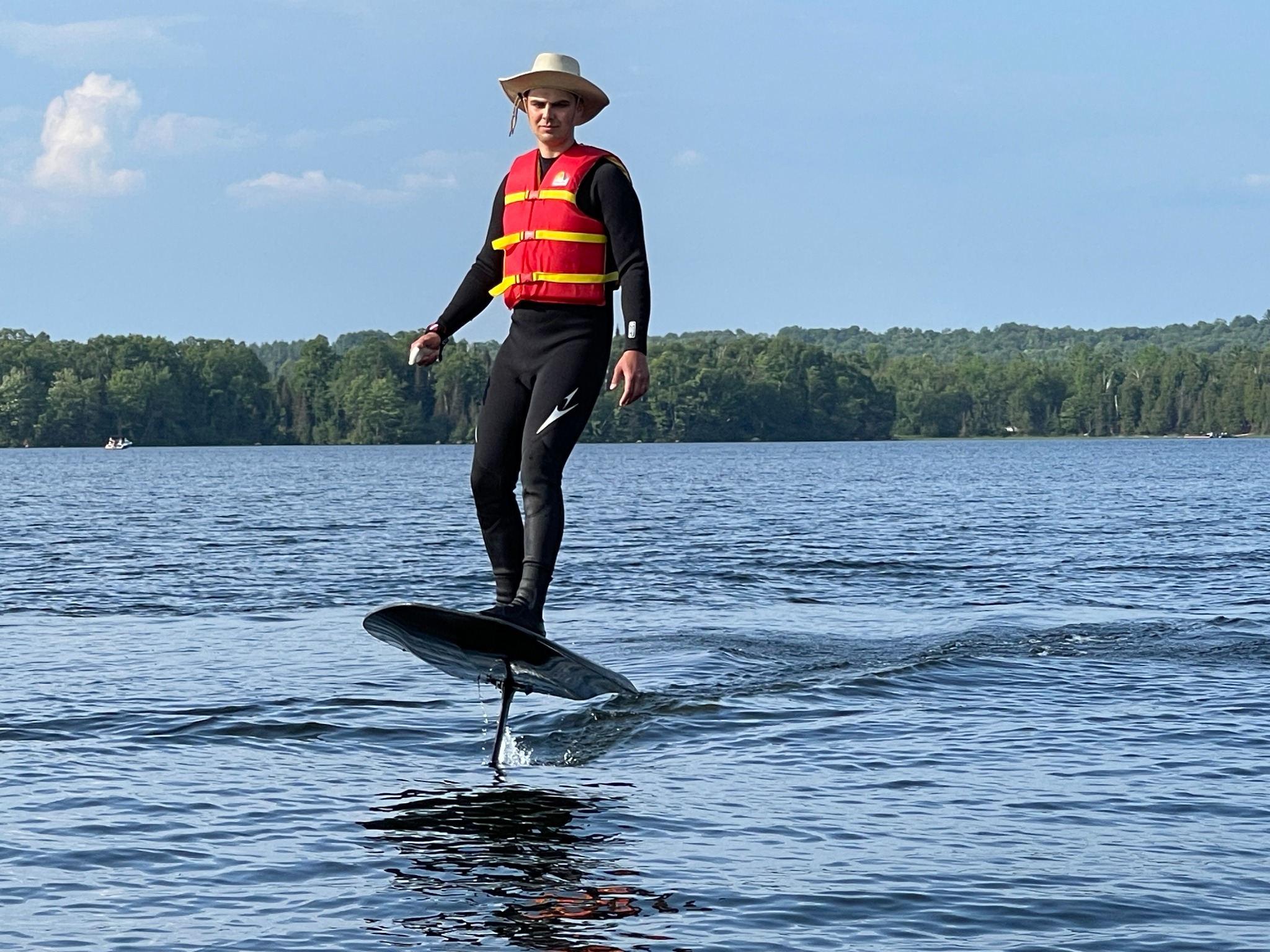
The second board included a number of changes based on what I had learned from the first one. I changed the hatch design, internal reinforcement, structure, and manufacturing process. I also integrated the battery into the board so it could be charged through a connector without removing it.
One of the biggest challenges was waterproofing the hatch. I tried to keep the design simple and reliable, so instead of using a quick-release system, I used several bolts around the opening to spread the clamping force evenly. I also made a soft custom gasket. It took longer to open, but it sealed much better.
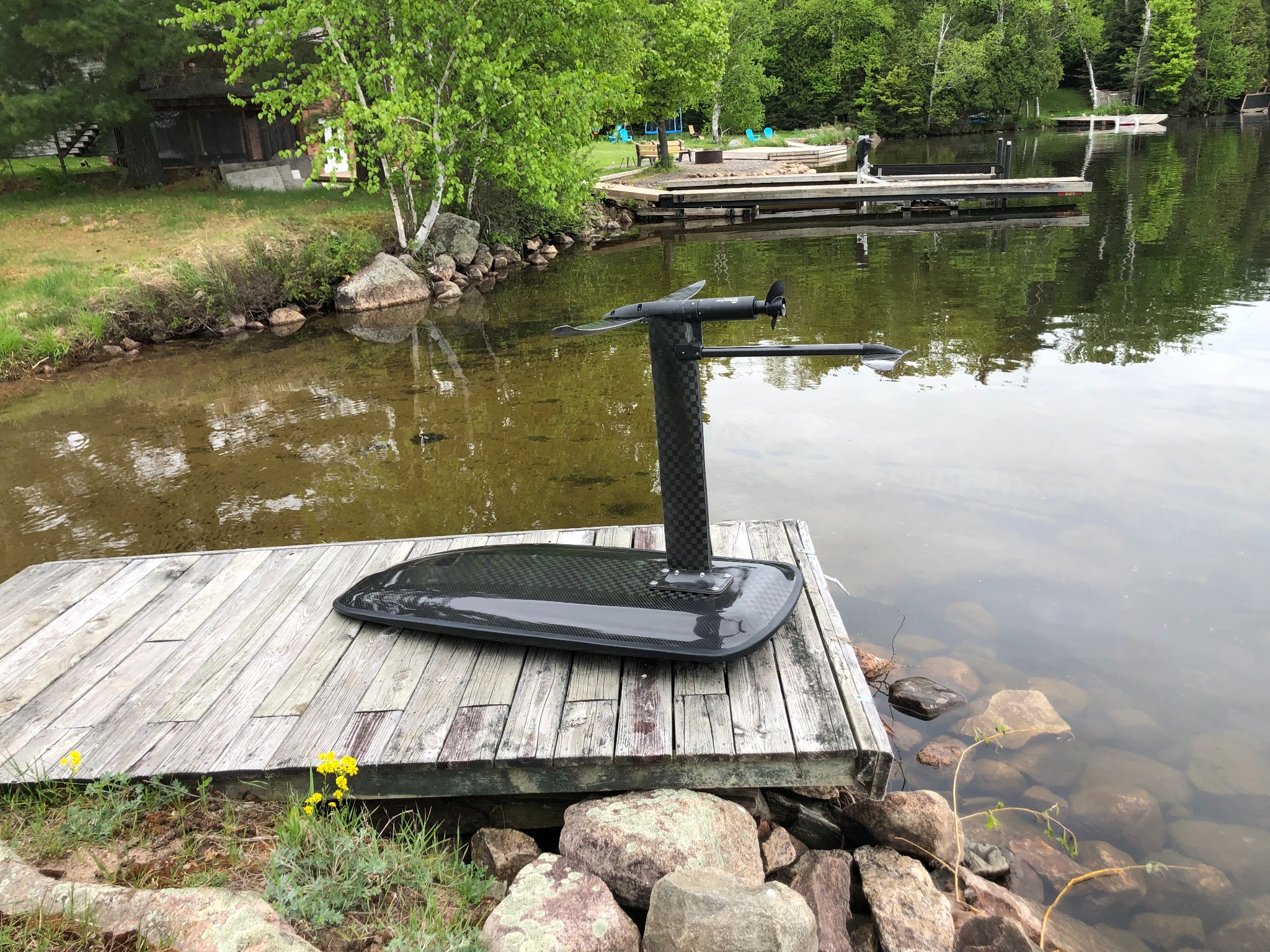
The board was built from carbon fibre using vacuum infusion. I made the outer shell in two separate molds and bonded the halves together around an internal rib structure. I also carried out simple load testing using static weights. About 200 kg was applied to both the board and the foil to check the structure against a 100 kg design load with a safety factor of roughly two.
The second board was finished in 2022, although I continued changing and improving small things through regular use. The total cost was about C$4,000, while the commercial boards I was comparing it with at the time were around C$15,000 to C$20,000.
Since then, I have put more than 300 hours on the board. It is still working and still gets used.
There were many points during this project when I genuinely wanted to give up. Some problems felt unsolvable at the time, and I had to step away from the project more than once because I was convinced I had reached a dead end. After taking a break and coming back to it, I was usually able to see the problem differently and find a solution. I kept pushing because I knew I wanted to finish what I had started. In the end, that became one of the most important parts of the project for me.