I first got into 3D printing as a hobby and as a way to practise designing and making parts. After using printers for a while, I wanted to understand the whole system better, so I decided to build one myself.
The first printer was built between 2017 and 2018. I wanted a rigid machine with a large build volume, but I could not find a design that suited what I had in mind. I ended up designing my own CoreXY printer with a 300 × 300 × 600 mm build volume.
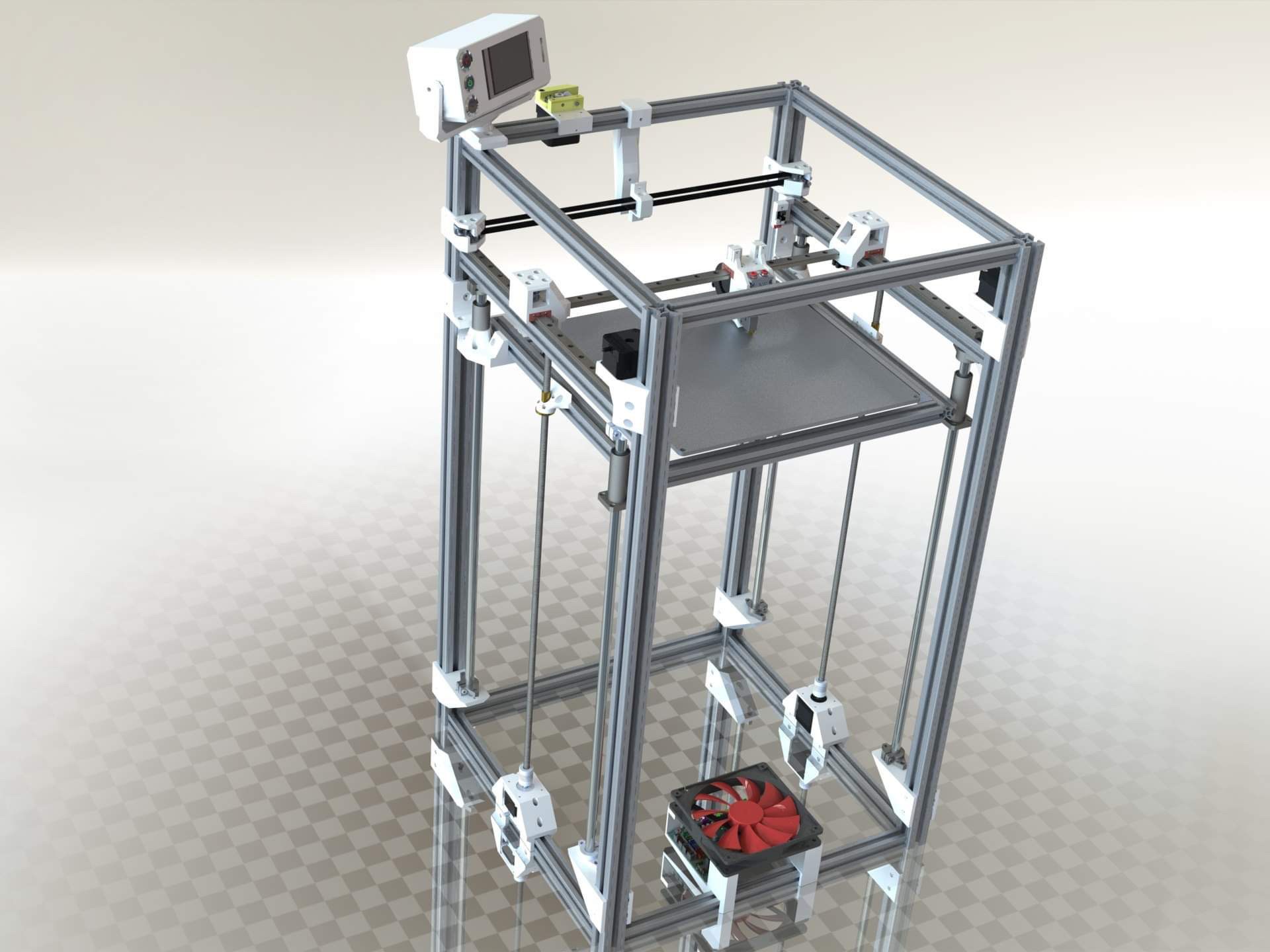
I designed the mechanical parts in SolidWorks, built the frame, installed the electronics, and configured the Marlin firmware myself. The printer used an aluminium-extrusion frame, linear rails, and an Arduino Mega 2560 controller. Once it was running, I kept changing smaller details such as the motor layout and extruder design. The final cost was about C$700.
After finishing the first printer, I started wondering whether I could build something with the same printing volume using fewer parts and less money. That became the second printer, which I built between 2018 and 2019.
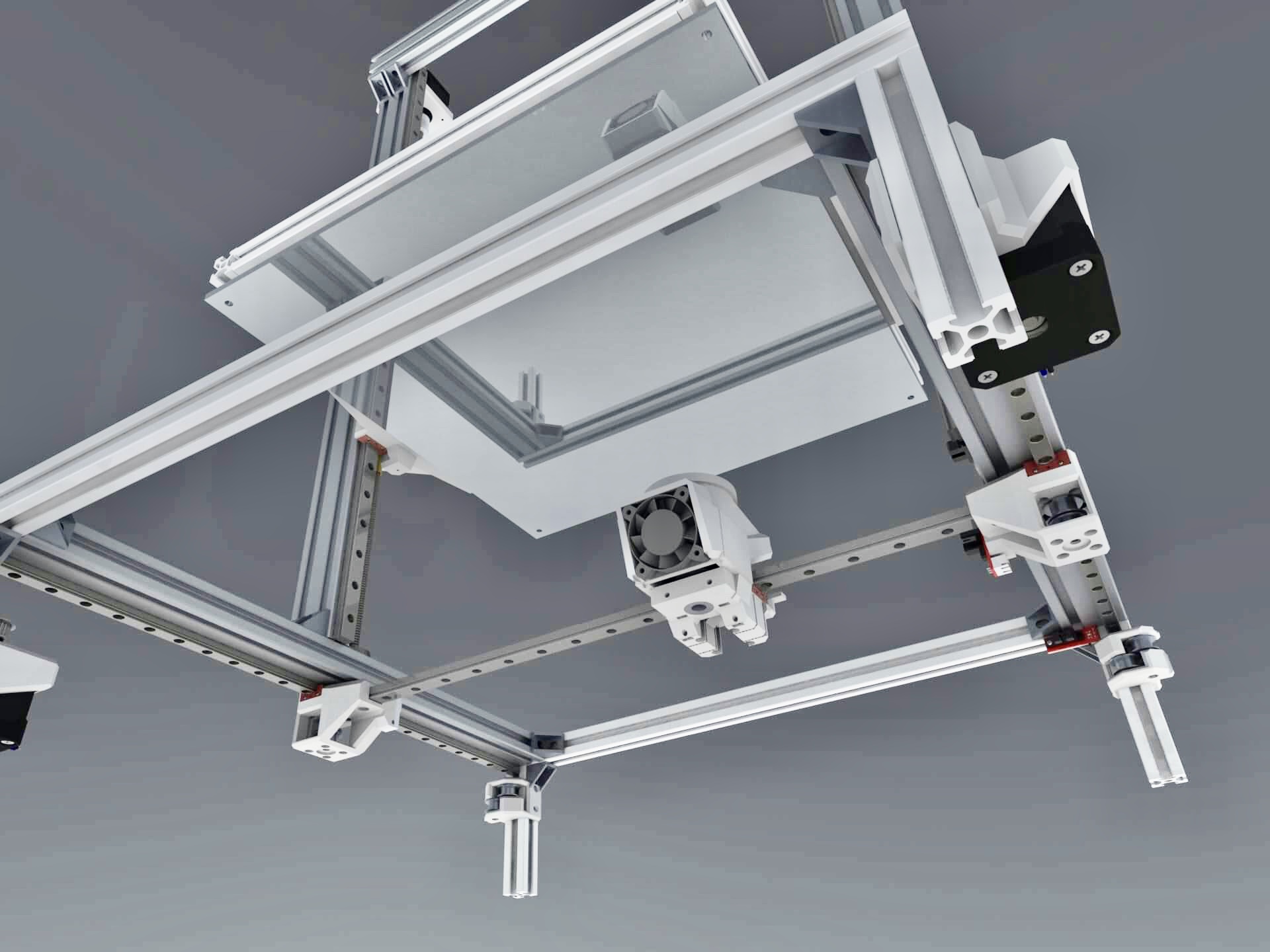
I kept the CoreXY motion system and the same 300 × 300 × 600 mm build volume, but changed the layout into an upside-down CoreXY design. The simpler structure used fewer frame components and brought the cost down to roughly C$300.
I also wanted to see how the two structures behaved differently during movement. Instead of doing a formal vibration analysis, I tried a simple experiment. I placed a cup of water on each printer and ran a G-code sequence that created a lot of machine movement. I measured the maximum movement of the water and repeated the test about ten times on each printer. It was not a precise engineering test, but it gave me a useful way to compare the two designs.
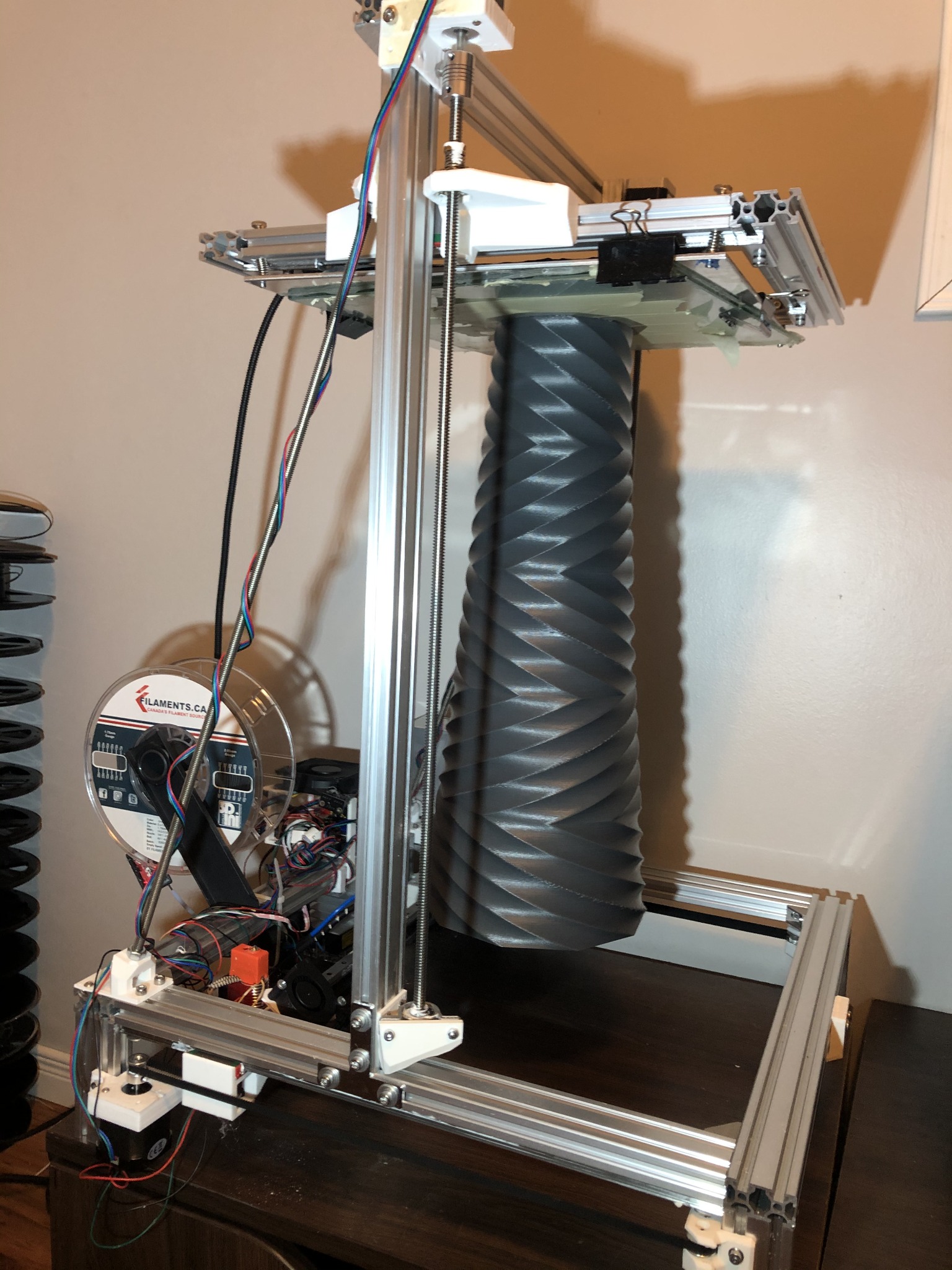
Both printers worked and were later used to make parts for several other projects. I eventually stopped using them as my interests moved in other directions, but building them taught me much more than simply operating a printer ever could.
The second printer was probably the more interesting of the two because it pushed me to question the usual layout and see how much of the structure could be simplified without losing the capability I wanted.